
+91 9895734005
Call us anytime
info@idealkerala.com
Drop us a line anytime!
+91 9895734005
Call us anytime
info@idealkerala.com
Drop us a line anytime!
What are the physical and psychological benefits of an Ayurvedic detox during the monsoon?
The monsoon season, which comes after the summer and brings Kerala's rain fields and lush vegetation to life is the ideal time to rejuvenate the body and mind. The monsoon season is a great time to traditionally believed in Ayurveda to help clear accumulated imbalances (‘Ama’)., balance the doshas and considered a favorable season in Ayurveda for Panchakarma practices and treatments.
The seasonal changes are described in Ayurveda as influencing Dosha balance, which also soothes the mind. This blog will go into great detail about the importance and effectiveness of an Ayurvedic detox during the monsoon.
Table of Contents
| 1 | Understand How Monsoon and Ayurveda Detox Connected |
| 2 | Karkidaka Chikitsa: The Monsoon Treatment |
| 3 | Key Benefits of Ayurvedic Detox During Monsoon Season |
| 4 | FAQ |
In the ancient Ayurvedic texts the monsoon season (Varsha Ritu) is regarded as a unique period. The Kapha Dosha (Cold Dosha) becomes more active during this period, while the Vayu Dosha (Vata Dosha) decreases. Panchakarma and other detox treatments work well because they manage the body's toxins (Ama).
The monsoon season's high humidity and coolness the humid climate is traditionally thought to support better absorption of oils. This is believed in Ayurveda to support natural cleansing processes. In a similar vein, it is ideal to participate in Ayurvedic detox programs during this time to restore the body's self-balance and soothe the mind because it is a time when the body and mind can adjust to the doshas.
The month of Karkidaka (July–August) is thought to be the best time for Ayurvedic treatment in Kerala's long-standing Ayurvedic tradition. The body's toxins (Ama) rise and the Doshas (Doshas) become out of balance during Karkidaka. During this period Karkidaka Chikitsa is practised to may help support overall immunity and resilience, regulate the Doshas and support the body’s natural balance and cleansing (as described in Ayurveda). Treatments included in Karkidaka Chikitsa are:
Panchakarma is a traditional Ayurvedic rejuvenation system that balances Doshas (Doshas) and manages toxins (Ama) from the body to help maintain health and vitality. Panchakarma works better because the body is covered in toxins during Karkidaka.
Abhyanga is one of the most important Ayurvedic treatment techniques. It involves massaging the body with a mixture of medical oils that may help support healthy circulation while also relaxing the body. During restorative therapies like Abhyanga helps with the body's detoxification Dosha control and physical and mental relaxation.
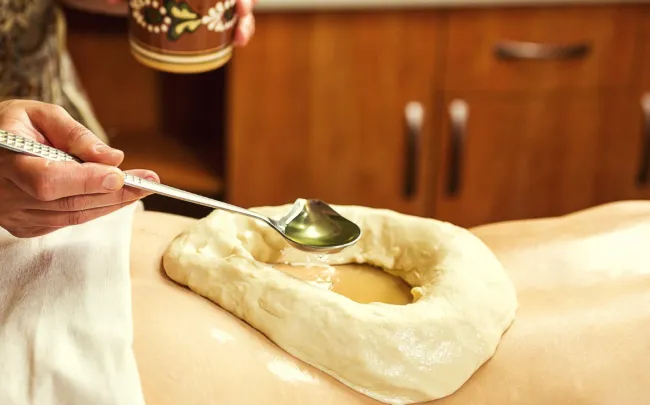
One of the Panchakarmas of Ayurveda, Swedana is a significant rejuvenating treatment that is part of Karkidaka therapy. Using ointments, medicated patches, hot washes and herbal steam it focuses on using heat to treat the body. It balances the Doshas and manages toxins (Ama) from the body.
One of the traditional and well-liked Ayurvedic treatments, shirodhara is especially crucial for treating Karkidaka. Warm herbal decoctions, cotton and medicated oil are continuously poured into the front of the head during this treatment. This manages toxins from the body and soothes the mind.
In Ayurveda Kizhi treatment is a traditional and efficient therapeutic approach. Hot medicated oils, hot medicated oil-filled patches and herbal balls (Kizhi) are used to massage the body. During the detox period of Karkidaka month, it is traditionally included in Ayurvedic cleansing programs and regulating Doshas (Doshas).
The body's toxins (Ama) are more active during the monsoon. During that period the body is rejuvenated, toxins are managed and the Doshas are balanced through an Ayurvedic detox.
It is, the Kapha (cold) element becomes more active during Karkidaka month while the Vayu Dosha (Vata) decreases. Detox treatments may become more effective as a result.
Abhyanga, Pizhichil, Shirodhara, Swedana, Panchakarma and Kizhi are the primary treatments. The body is fully revitalized by these treatments.