
+91 9895734005
Call us anytime
info@idealkerala.com
Drop us a line anytime!
+91 9895734005
Call us anytime
info@idealkerala.com
Drop us a line anytime!
Experience Abhyanga massage at Ideal Ayurvedic Resort in Kovalam, Kerala. This traditional Ayurvedic oil massage uses warm herbal oils and is planned by our Ayurvedic physician following a personal consultation, according to your individual needs and suitability.
Abhyanga is a traditional Ayurvedic full-body massage in which warm, herb-infused oil is applied from scalp to feet in slow, rhythmic strokes. The oil is chosen according to your dosha, or constitutional body type, after a consultation with an Ayurvedic physician.
The word comes from the Sanskrit abhi (towards) and anga (limb). In the classical texts, abhyanga belongs to dinacharya, the daily routine, so it was always seen as regular upkeep rather than an emergency measure.
What separates it from a standard spa oil massage is the decision-making before anyone touches you. At our Kovalam centre, the oil, the pressure and the sequence are all set by our physician after observing you.
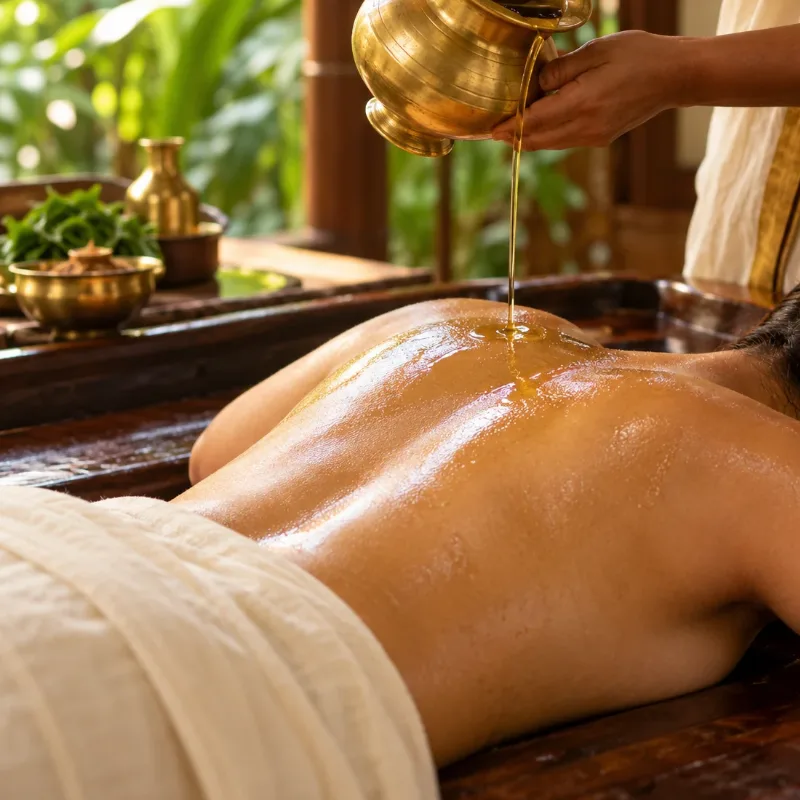
A simple, unhurried process guided by our Ayurvedic physician and trained therapists at our Kovalam centre.
Our physician assesses your constitution, current complaints and medications, and confirms oil therapy is suitable that day.
The herbal oil chosen for you is warmed to a comfortable temperature so it spreads evenly on the skin.
Warm oil is applied in a set order from head to feet, with strokes matched to each region of the body.
You rest briefly so the oil settles, then finish with a warm bath or steam, as advised by your physician.
The oil goes onto the head, ears, face, neck, chest, abdomen, arms, joints, back, knees and feet, one region at a time. You will be asked to change position several times (seven positions in all) so the therapist can reach every area properly, and two therapists usually work in synchrony during full-body sessions. Strokes are long along the limbs, circular over the joints and lighter over the abdomen and face. You stay under clean draping throughout, and our therapists are always the same gender as the guest unless you request otherwise.
A typical abhyanga session lasts 45 to 60 minutes. Allow about 90 minutes in total once you include the consultation, the rest period and the bath. When abhyanga is the preparatory stage of a longer Panchakarma programme, the daily session may be shorter, because it is one step in a sequence rather than the whole treatment.
The oils used for Abhyanga massage are selected according to individual needs and the advice of our Ayurvedic physician. Warm herbal oils are applied using traditional Ayurvedic massage techniques, with the choice of oil and treatment approach determined during your consultation.
Abhyanga is traditionally used as part of Ayurvedic wellness routines. People come to us for different reasons, so here is a plain account of what guests tend to notice and what they should not expect.
The most consistent feedback from our guests is a settled, calm feeling, often from the first session.
Many guests tell us they sleep more soundly during a course of treatment.
Warm oil applied regularly tends to leave dry skin softer and less tight.
Slow oil work over stiff shoulders, a tight lower back or tired legs is usually experienced as relieving.
On a longer stay, guests often say the daily rhythm matters as much as the massage itself.
Often chosen as part of a regular, physician-guided Ayurvedic routine.
Abhyanga is traditionally used as a supportive therapy alongside proper medical care. Our Ayurvedic physician may suggest it for people who:
Being clear about this matters more to us than filling the diary. Please tell us about any of the following when you book, not at the door. It saves everyone a wasted journey, and it is safer.
Here is how a typical abhyanga session runs at our Kovalam centre, from preparing beforehand to resting afterwards. Allow about 90 minutes in total.
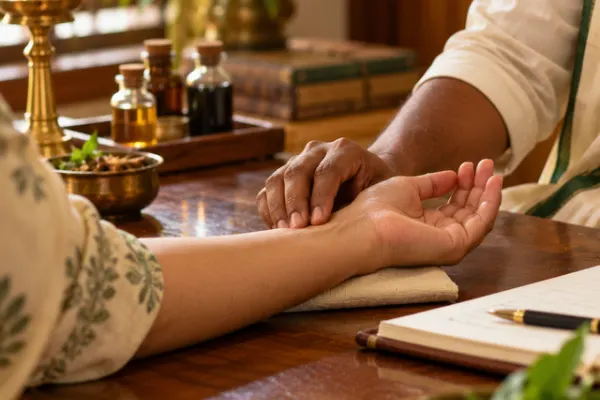 Before Treatment
Eat something light about two hours before and skip heavy meals and excess caffeine. Wear loose clothing you do not mind getting oil on. Our physician then reviews your constitution and medications.
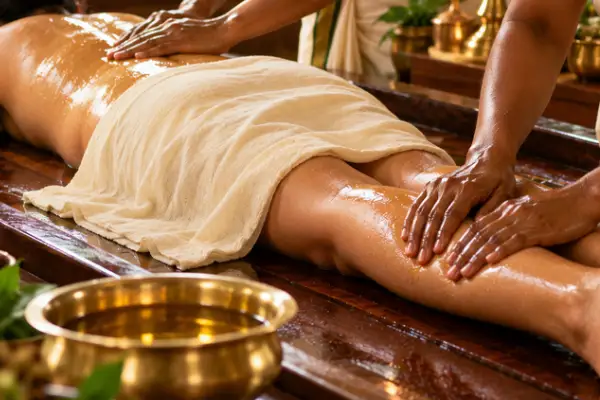 During Treatment
Warm oil is applied over the whole body in rhythmic strokes, usually by two therapists working together. You stay under clean draping throughout, and the session lasts 45 to 60 minutes.
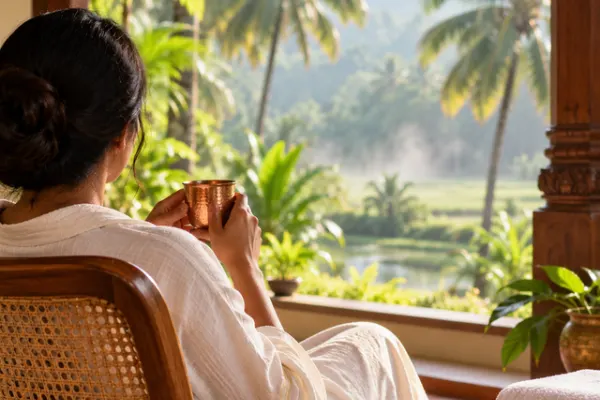 After Treatment
Rest for a while, then take a warm bath. Drink warm water, avoid heavy food that evening and plan a slow, light day. Many guests feel pleasantly drowsy after the first session.
Abhyanga is often combined with related practices to suit the person. These are the variations our physician may recommend.
Oil work focused on the scalp, neck and shoulder line (head, neck and shoulders). Usually chosen by guests who carry tension in the upper back or struggle to switch off at night.
Warm oil applied to the feet with attention to specific points. Frequently added at the end of the day, or after a long journey.
Here abhyanga is the preparatory stage. It softens the tissues before the main cleansing procedures and is prescribed as part of a supervised programme, not booked on its own.
Abhyanga is often followed by steam, so you may also like our Swedana Ayurvedic steam bath, or our Shirodhara treatment for the head.
Pricing depends on the session length and on whether you are booking a single treatment or a residential package with accommodation and diet included. Single sessions and multi-day programmes are priced separately, so please ask us for the current rate for your dates.
We are a residential Ayurvedic centre in Kovalam, Thiruvananthapuram, and we have been treating guests here since 1997. These are the things we think are worth knowing before you book.
Every treatment plan is set by our physician, not chosen from a menu at reception.
Our therapists are trained in-house and work under supervision.
Residential guests receive a diet plan with their therapy, because in Ayurveda what you eat during a course of treatment is not a side issue.
We would rather tell you a therapy is unsuitable than sell it to you.
Real experiences from guests who have stayed and been treated with us.
The Abhyanga massage was a wonderful experience. The therapist was professional and attentive, and the entire session felt calming and rejuvenating.
I really enjoyed the warm oil massage and the peaceful atmosphere. The team was kind and made sure I felt comfortable throughout the treatment.
I appreciated the personal attention and care provided by the team. The Abhyanga treatment was relaxing, and the whole experience felt welcoming and well organised.
Quick answers to the questions guests ask us most often before booking.
Abhyanga is an Ayurvedic massage in which warm herbal oil is applied from head to feet in rhythmic strokes. The oil is selected according to your constitution after a consultation with an Ayurvedic physician, which is what distinguishes it from a general oil massage.
Around 45 to 60 minutes for the massage itself. Allow about 90 minutes in total once you include the consultation, the rest period afterwards and the warm bath.
For general upkeep, once a week is a reasonable rhythm for most people. Classical texts describe it as a daily practice, and guests staying with us on a residential programme usually receive it daily for the length of their stay. Our physician will suggest a frequency that fits your situation rather than applying a fixed rule.
The difference is the assessment behind it. In a regular massage, the oil and pressure are usually standard. In abhyanga, an Ayurvedic physician selects the oil, the pressure and the sequence based on your constitution and your current complaints, and the session follows a set order over the whole body.
Not without clearance from your obstetrician. Pregnancy changes what is appropriate in terms of oils, positioning and pressure, so we ask for your doctor's approval before booking, and we adjust the treatment accordingly. Please raise this at the time of enquiry.
Anyone with fever, active infection, indigestion, open wounds or an active skin infection. Recent surgery, cardiac conditions, clotting disorders, blood-thinning medication and pregnancy all require your treating doctor's clearance first.
No. Abhyanga is a traditional wellness and supportive therapy, not a cure for any disease. It may be used alongside medical treatment with your doctor's knowledge, and it should never replace prescribed care.
Take a warm bath, rest for a while and keep the rest of your day light. Drink warm water rather than cold, avoid heavy food that evening, and do not plan strenuous activity straight afterwards.
Yes, we recommend it, particularly during the November to February season. Call +91 9895734005 or use our booking form, and mention any health conditions or medications at that point so our physician can review before you arrive.
Many of our guests report sleeping more soundly during a course of treatment, and improved sleep is one of the traditional indications for abhyanga in Ayurvedic texts. It is not a treatment for a diagnosed sleep disorder, and persistent insomnia should be assessed by a doctor.

Speak with our team about your requirements and learn whether abhyanga is right for you. Our physician will review any health conditions before you arrive.