
+91 9895734005
Call us anytime
info@idealkerala.com
Drop us a line anytime!
+91 9895734005
Call us anytime
info@idealkerala.com
Drop us a line anytime!
A physician-supervised course of medicated ghee taken by mouth, used to prepare the body before Panchakarma, at Ideal Ayurvedic Resort, Kovalam.
Snehapanam is a traditional Ayurvedic therapy in which medicated ghee, made from cow's milk, is taken by mouth in carefully measured doses. It is also known as internal oleation, and it is most often given to prepare the body before Panchakarma. The type of ghee and the dose are set according to your dosha, or constitutional body type, after a consultation with an Ayurvedic physician.
The word comes from the Sanskrit sneha (oil or fat) and pana (drinking). In the classical texts it is the first stage of a Panchakarma programme, meant to soften and loosen the body from the inside before deeper cleansing steps.
What separates it from a home remedy is the supervision. The right dose depends on how well you digest, so at our Kovalam centre the ghee, the quantity and how it is increased are all decided by our physician, who reviews you every day.
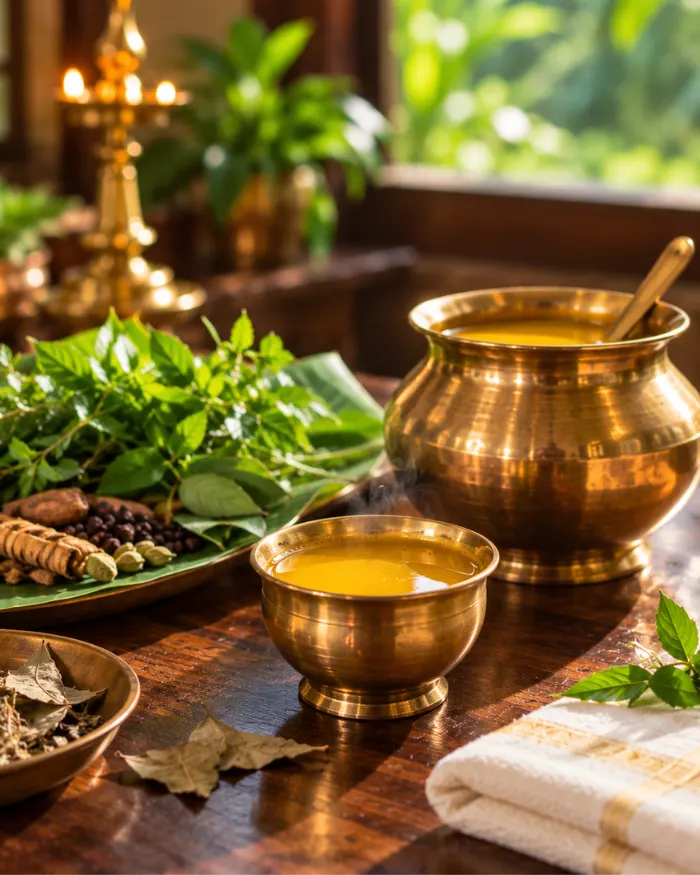
A careful, unhurried process guided by our Ayurvedic physician and trained team at our Kovalam centre.
Our physician assesses your constitution, digestion and medications, and confirms Snehapanam is suitable for you.
You follow a light, warm diet so your digestion is ready for the ghee.
A measured dose of the ghee chosen for you is taken, with the dose usually increased gradually over the days.
You rest while the ghee is digested, and the physician checks how you are responding each day.
The ghee is prepared with herbs chosen for you, and the dose is based on your digestive capacity. It is usually taken in the morning, and you are asked not to eat until the ghee has been fully digested, after which you have a light, warm meal. The physician reviews you every day and adjusts or stops the dose if needed. Warm water is advised through the day, and you should tell the team at once if you feel unwell.
Snehapanam is given as a course, usually lasting a few days up to about a week. The exact length depends on your constitution, your digestion and the physician's plan. When it is the preparatory stage of Panchakarma, it is followed by external oil massage, steam and, where prescribed, a supervised cleansing step.
Snehapanam is traditionally used as a preparatory step in Ayurvedic programmes. People come to us for different reasons, so here is a plain account of what it is traditionally used for and what you should not expect.
Traditionally used to support weak digestion, with the dose set by how well you digest.
Ghee is considered nourishing in Ayurveda, and the course is often chosen when guests feel depleted.
Often chosen for dry, rough skin and a dry feeling in the body, which Ayurveda reads as vata imbalance.
Traditionally used where dryness and stiffness go together, as part of a physician-guided plan.
Its main role is to prepare the body for the deeper cleansing stages that follow.
Often chosen as part of a regular, physician-guided Ayurvedic routine.
Snehapanam is traditionally used as a supportive and preparatory therapy alongside proper medical care. Our Ayurvedic physician may suggest it for people who:
Because Snehapanam is taken internally, being clear about this matters more to us than filling the diary. Please tell us about any of the following when you book, not at the door. It saves everyone a wasted journey, and it is safer.
Here is how a typical Snehapanam course runs at our Kovalam centre, from preparing beforehand to resting afterwards. It is usually part of a residential stay.
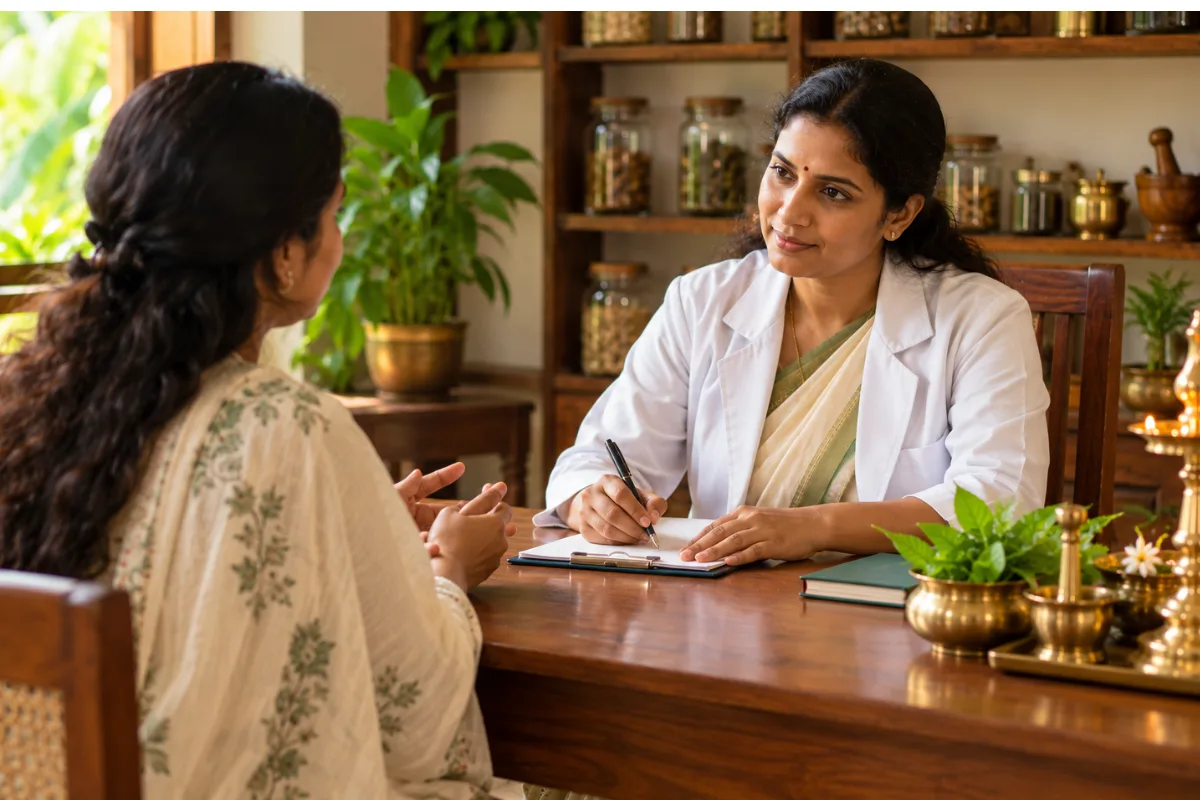 Before Treatment
Follow a light diet in the days before, and avoid alcohol, smoking, and spicy, oily or heavy food. Our physician reviews your constitution, digestion and medications before the first dose.
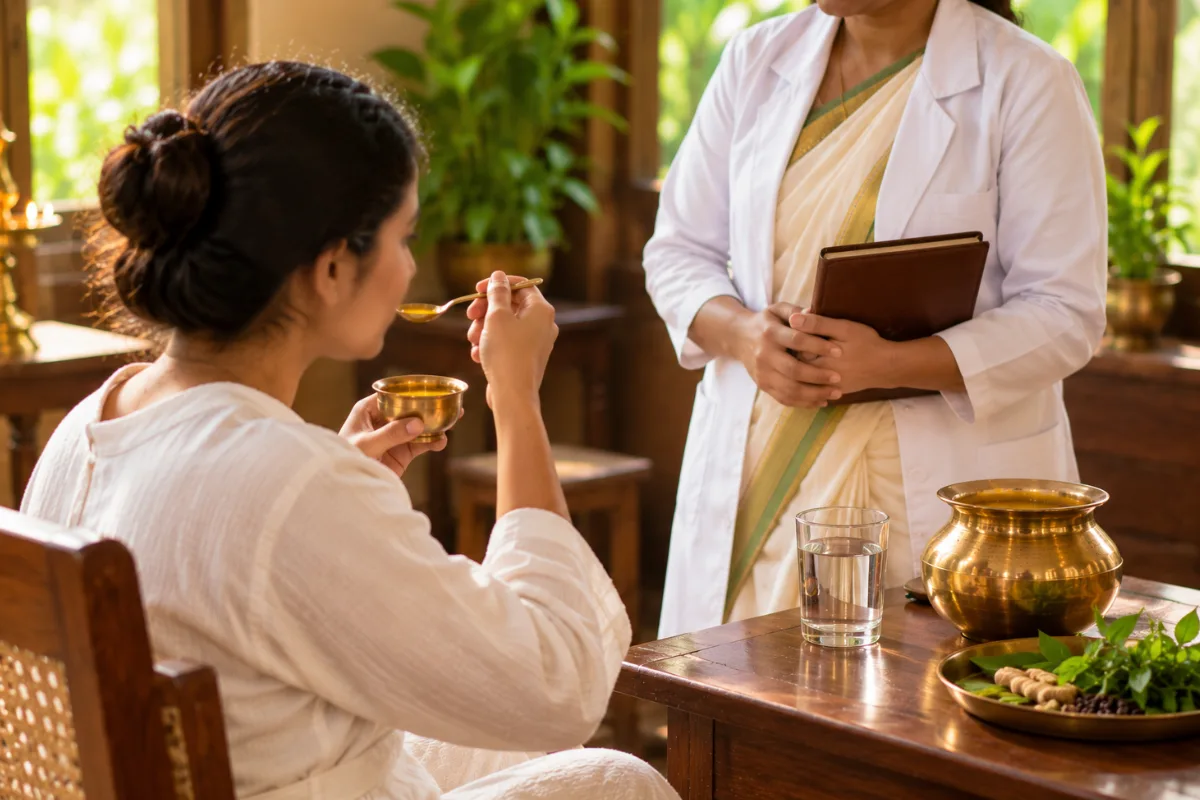 During Treatment
You take the measured dose of medicated ghee, usually in the morning, then rest and sip warm water as advised. You eat only once the ghee has been digested, and the physician checks you every day.
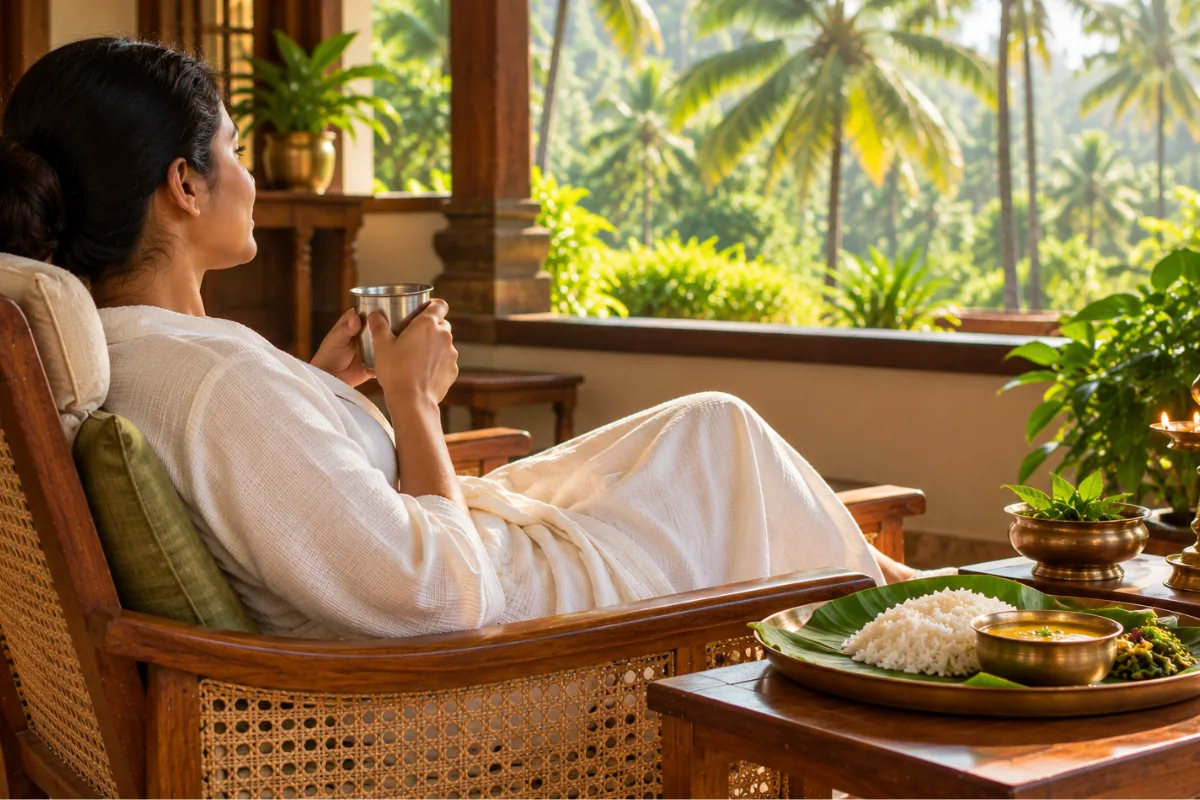 After Treatment
Keep to warm water and light, easily digestible meals such as rice, lentils and cooked vegetables. Avoid cold and raw foods, strenuous exercise, alcohol and smoking, and rest as much as you need.
Snehapanam is rarely the whole treatment. It is the first stage of a sequence, and these are the steps our physician may prescribe after it.
Medicated ghee is taken by mouth over a few days. This is internal oleation, and it is the stage that prepares the body for everything that follows.
External oil massage and steam are commonly given in the days after the oleation, to loosen the body further before the cleansing step.
Where the physician prescribes it, a mild, supervised cleansing step follows. Not every guest needs this stage, and it is never started without a medical review.
You may also like our Abhyanga Ayurvedic massage or our Swedana Ayurvedic steam bath.
Pricing depends on the length of the course and on whether it is part of a residential Panchakarma package with accommodation and diet included. Snehapanam is usually given as part of a wider programme, so please ask us for the current rate for your dates.
We are a residential Ayurvedic centre in Kovalam, Thiruvananthapuram, and we have been treating guests here since 1997. These are the things we think are worth knowing before you book.
Every treatment plan is set by our physician, not chosen from a menu at reception.
The dose is reviewed every day, because the right amount depends on how you are responding.
Residential guests receive a diet plan with their therapy, because in Ayurveda what you eat during a course of treatment is not a side issue.
We would rather tell you a therapy is unsuitable than sell it to you.
Real experiences from guests who have stayed and been treated with us.
The team was welcoming and professional from the initial consultation onwards. The treatment process and daily food recommendations were explained in detail, which helped me understand this traditional Ayurvedic therapy better. A pleasant and reassuring experience.
My Snehapanam treatment was a well-organised and informative experience. The Ayurvedic practitioner explained the procedure and dietary instructions clearly. I appreciated the personalised attention and the peaceful atmosphere throughout my stay.
I appreciated the attention given to my comfort during the Snehapanam programme. The practitioner provided clear guidance on the treatment routine, rest and diet. The serene surroundings made the overall wellness experience especially enjoyable.
Quick answers to the questions guests ask us most often before booking.
Snehapanam is the Ayurvedic practice of drinking medicated ghee, or sometimes medicated oil, in carefully measured doses. It is also called internal oleation, and it is traditionally used to prepare the body before Panchakarma. The ghee and the dose are set by our physician for each person.
It is given as a course, usually lasting a few days up to about a week, depending on your constitution, your digestion and the physician's plan. The dose is usually increased gradually, and the physician reviews you each day.
Most Ayurvedic therapies, such as abhyanga, work on the outside of the body. Snehapanam works from the inside, by taking medicated ghee by mouth, and it is mainly used to prepare the body for the deeper cleansing stages of Panchakarma.
Traditionally it is used to support weak digestion, dryness of the skin and body, and stiffness that Ayurveda links with vata imbalance, and as the preparatory stage of Panchakarma. It is a supportive wellness therapy and not a treatment for any specific disease.
A light, warm and easily digestible diet, such as rice, lentils and cooked vegetables. Avoid cold and raw foods, and spicy, oily or heavy meals. Do not eat until the physician says the ghee has been digested, and after that have regular light meals rather than skipping them.
It is not carried out during fever, active infection, indigestion, nausea, poor appetite or diarrhoea, or if you are allergic to ghee or dairy. Pregnancy, liver, gallbladder or pancreatic conditions, high cholesterol, heart disease, diabetes, recent surgery and regular prescription medication need your doctor's clearance first. It should only ever be taken under a physician's supervision.
When supervised by an Ayurvedic physician it is generally well tolerated, but some people feel nausea, heaviness, a loss of appetite or temporary digestive discomfort, especially as the dose rises. Tell the therapy team straight away if you feel unwell, because the dose may need adjusting.
No. Snehapanam is a traditional supportive and preparatory therapy, not a cure for psoriasis, peptic ulcer, arthritis, urinary problems or any other disease. It may be used alongside medical treatment with your doctor's knowledge, and it should never replace prescribed care.
No. The type of ghee, the dose and how it is increased depend on your digestion and your health, and taking too much, or taking it when your digestion is weak, can make you unwell. It should only be taken under the supervision of an Ayurvedic physician.
Yes, we recommend it, particularly during the November to February season, because Snehapanam is given as a course and is usually part of a residential programme. Call +91 9895734005 or use our booking form, and mention any health conditions or medications at that point so our physician can review before you arrive.

Speak with our team about your requirements and learn whether Snehapanam is right for you. Our physician will review any health conditions before you arrive.