
+91 9895734005
Call us anytime
info@idealkerala.com
Drop us a line anytime!
+91 9895734005
Call us anytime
info@idealkerala.com
Drop us a line anytime!
Waking up with stiff, swollen joints feels like a betrayal by your own body. Most doctors will call it rheumatoid arthritis (RA). But if you look at it through the lens of Ayurveda, you are likely dealing with Amavata. While they look similar on the surface, the way we approach amavata treatment vs. rheumatoid arthritis in a clinical sense is worlds apart. While conventional medicine often focuses on symptom control and immune regulation, Ayurveda approaches joint discomfort through digestion, metabolism, and overall body balance. .
Table of Contents
| 1 | Is Amavata Just Another Name for Rheumatoid Arthritis? |
| 2 | How Does Amavata Treatment vs. Rheumatoid Arthritis Management Differ? |
| 3 | Final Thoughts |
| 4 | FAQ |
Not exactly. While modern medicine views RA as an autoimmune disorder where the body attacks its own tissues, in Ayurveda, Amavata is traditionally associated with impaired digestion and toxin buildup. When your digestive fire (Agni) weakens, it creates Ama, which Ayurveda describes as accumulated metabolic waste caused by incomplete digestion.
When this Ama hitches a ride with Vata (the energy of movement), Ayurveda suggests this imbalance may contribute to joint discomfort and stiffness. That is the birth of Amavata. So, while the pain feels the same, the root cause is entirely different.
In a standard hospital setting, RA is often managed with immunosuppressants or steroids. It’s about quietening the immune system. Ayurvedic care often includes therapies aimed at supporting digestion and restoring balance. We don't just want to mask the pain; we want to stop the production of Ama.
At Ideal Ayurvedic Resort, the focus is on deep purification. We use specific therapies like Langhanam (fasting) and Sodhana Chikitsa (purification) to dry up the toxins.
It isn't just about joint pain. Because this is a systemic issue, you’ll notice other red flags:
These symptoms are the body’s way of saying your metabolic waste is overflowing. Modern RA diagnosis relies heavily on blood markers like RF factor or anti-CCP, but an Ayurvedic physician looks at the coating on your tongue and the quality of your pulse.
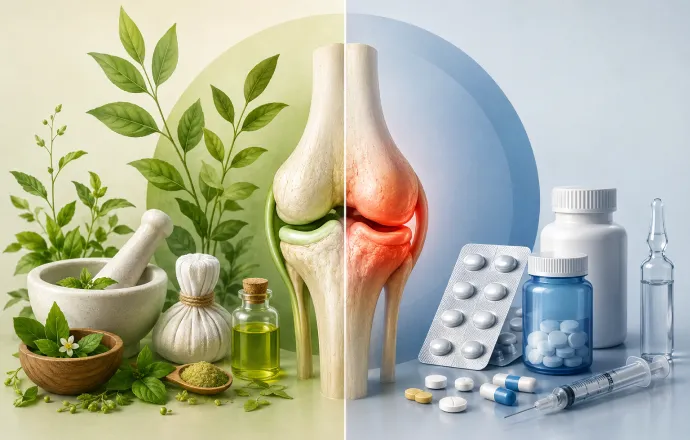
Why do people flock to Kerala for joint issues? It’s because of the specialized heat treatments. Procedures like Podikkizhi (herbal powder massage) and Vaitharana Basti are specifically designed to break down the sticky Ama.
Unlike a standard massage, these are medical treatments. These therapies are traditionally used to support circulation, mobility, and overall joint comfort. If you're looking for a long-term fix, you have to address the gut-joint connection.
The gap between a diagnosis and a cure is often found in how we treat the root. Are you just cooling the flames, or are you removing the fuel? Choosing between standard amavata treatment vs. rheumatoid arthritis path depends on your goals. Ready to see how a customized detox could change your mobility?
Ayurveda focuses on "Samprapti Vighatana" breaking the disease cycle. While "cure" is a heavy word in any medicine, we consistently see patients regain mobility and stop the progression of the disease by fixing their digestion and clearing toxins.
Absolutely. If you keep eating heavy, fried, or "clogging" foods while taking treatment, you're just adding more fuel to the fire. We usually recommend warm, light, and easily digestible meals to keep the Ama at bay.
In Ayurveda, this is the classic sign of Ama. Overnight, the toxins settle and "freeze" in the joints. Movement and heat help liquefy this sludge, which is why you feel slightly better as the day goes on.
Not at all. Some of the deep-tissue herbal "scraping" massages are intense, but most patients find the warmth of the oils and the steam treatments incredibly relieving for their pain.