
+91 9895734005
Call us anytime
info@idealkerala.com
Drop us a line anytime!
+91 9895734005
Call us anytime
info@idealkerala.com
Drop us a line anytime!
At Chowara Beach in Kovalam, a stay built around Ayurvedic treatment for stress relief in Kerala starts with a consultation, not a spa menu. A vaidyar checks pulse, sleep patterns, digestion, and mood before recommending anything at all. Burnout, in this framework, is treated as an imbalance to correct rather than a symptom to numb.
Table of Contents
Ayurveda organizes the body around three doshas: Vata, Pitta, and Kapha. Vata governs movement and the nervous system, so when it runs high, the result looks a lot like modern burnout. Racing thoughts at midnight. A jaw that won't unclench. Meals skipped, then eaten too fast. Ayurvedic texts describe an aggravated Vata state as one marked by restlessness and low-grade fear, which tracks closely with how people describe chronic work stress once it stops being occasional and starts being constant.
The response isn't a single pill or a single session. It's a sequence, built around warmth, oil, routine, and rest, applied consistently enough to bring the nervous system back down.
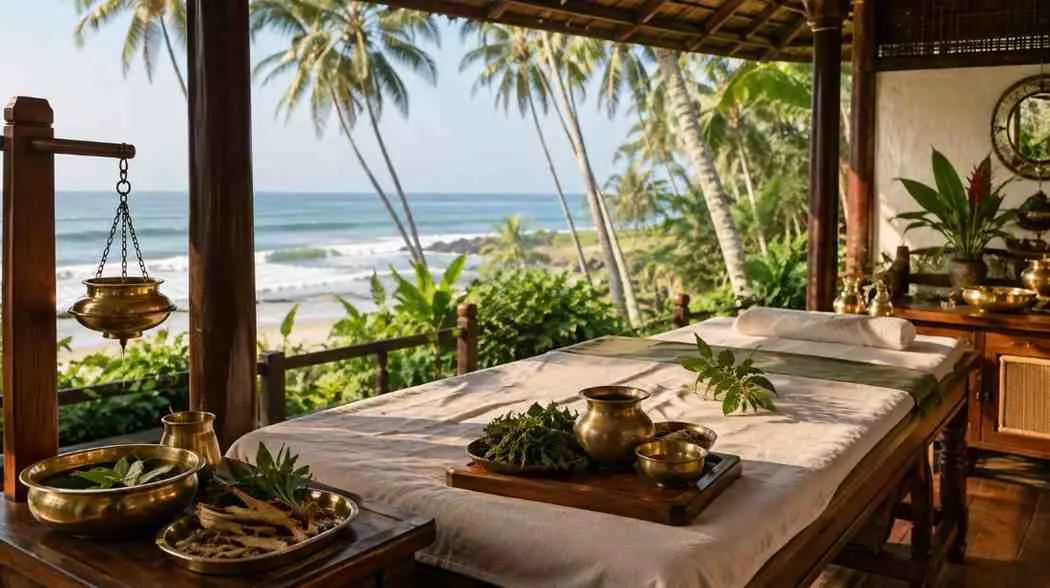
Two therapies do most of the work here, and they're not interchangeable. Shirodhara involves a thin, continuous stream of warm medicated oil poured over the forehead, at the point Ayurvedic tradition calls the third eye. Sessions typically run 60 to 90 minutes. People often describe the mind slowing down partway through, though the exact response varies by individual and by how long the stress has been building.
Abhyanga, by contrast, is a full-body oil massage, usually with ashwagandha or brahmi-infused oil. It works on circulation and muscular tension first, and mental calm second. Practitioners often pair the two: Abhyanga to loosen the body, and shirodhara to settle the mind. Neither is presented as a one-time fix. Repeated sessions across several days tend to be part of any serious protocol.
Three herbs show up again and again in stress-focused Ayurvedic formulations. Ashwagandha, often called an adaptogen, is used to help the body regulate its stress response. Brahmi is associated with mental clarity and is commonly included in formulations aimed at anxiety. Jatamansi has a longer history as a calming herb, often used to support sleep quality when racing thoughts are the main complaint.
None of this replaces conventional medical or psychological care. Clinical research on Ayurvedic approaches remains limited, with few well-designed trials available to confirm effectiveness, according to the National Center for Complementary and Integrative Health. Anyone managing a diagnosed anxiety or stress disorder should treat these therapies as a complement to, not a replacement for, professional medical guidance.
For stress that has built up over months rather than weeks, a short Panchakarma program is often the more realistic option. It's not one treatment but a sequenced set of therapies, oil massage, steam, herbal intake, and rest, adjusted daily based on how the body responds. The vaidyar reassesses through the stay rather than following a fixed script, which is the main difference between this and a standard spa package.
An Ayurvedic treatment for stress relief in Kerala works less like a quick reset and more like a structured pause, one built on consultation, repetition, and adjustment rather than a single therapy done once. If you're weighing a wellness stay against ongoing burnout, the more useful question isn't which treatment sounds most relaxing. It's whether you're ready to commit several consecutive days to a routine designed to be repeated, not sampled.
Most sessions run 60 to 90 minutes, depending on the individual plan a vaidyar recommends. First-timers sometimes find the middle stretch strange before it turns calming, so give it the full session before deciding how it feels.
Yes, in most cases. Ayurvedic therapies here are generally compatible with standard medication, but tell the practitioner exactly what you're on beforehand. They'll flag anything that might interact before starting you on herbal formulations.
Generally, yes, since programs are built around your health history from day one. Expect a detailed intake before anything starts. People with existing medical conditions should still loop in their regular doctor first.
Pulse reading, questions about sleep, digestion, stress patterns, and daily routine. It's closer to a proper medical history than a spa intake form. That first conversation shapes every therapy you're offered afterward.
Unlikely, and no honest practitioner will promise that. Chronic stress usually responds better to a run of consecutive sessions over several days, not an isolated one-off treatment during a weekend trip.