
+91 9895734005
Call us anytime
info@idealkerala.com
Drop us a line anytime!
+91 9895734005
Call us anytime
info@idealkerala.com
Drop us a line anytime!
Does your body feel like it’s holding onto a year’s worth of tension? Most of us carry stress in our shoulders, lower back, and joints until it becomes a permanent resident. A standard massage might scratch the surface, but when the pain is deep-seated, you need something that reaches the core of the issue. Enter the Kizhi therapy in Ayurveda. This isn't just a spa treatment; it’s a rhythmic, heated therapy that uses herbal "bundles" to pull toxins out of your muscles.
At Ideal Ayurvedic Resort, we use this traditional technique to help guests hit the reset button on their physical and mental well-being. If you're looking for a guide to Ayurvedic rejuvenation, this is the place to start.
Table of Contents
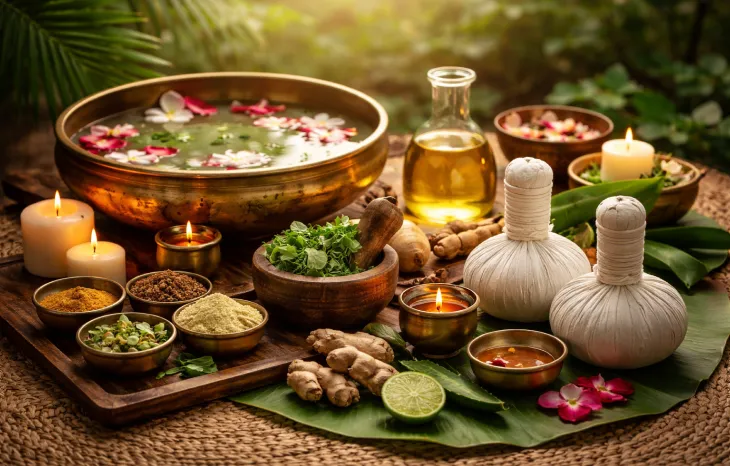
The short answer? It’s a poultice massage."Kizhi" (pronounced kee-jee) is a Malayalam word that means "bundle" or "bolus." We take specific medicinal herbs, powders, or even special rice, wrap them in a muslin cloth, and tie them into tight, hand-sized pouches.
These bundles are then soaked in warm, medicated oils and massaged over your body with synchronized, rhythmic strokes. The combination of heat and herbal medicine opens your pores, allowing the healing properties to penetrate deep into your tissues. It’s like a warm hug for your nervous system.
If you're dealing with "Vata" issues—think joint stiffness, back pain, or arthritis—Kizhi is your best friend. In Ayurveda, pain is often caused by a blockage of energy or blood flow. The intense, targeted heat from the poultice dilates your blood vessels and gets the circulation moving again.
This isn't just about feeling good at the moment. The therapy induces perspiration, which is the body’s natural way of flushing out deep-seated toxins (Ama). By the time the session is over, the inflammation in your joints is reduced, and your flexibility starts to return.
We often talk about the physical benefits, but the mental impact is just as strong. The rhythmic tapping and warmth of the poultices send a signal to your brain to switch off the "fight or flight" mode. It’s incredibly effective for chronic stress and insomnia.
The sensory experience—the smell of the herbs, the warmth of the oil, and the synchronized movements—works to ground your energy. It’s a form of moving meditation that leaves you feeling "lighter" both physically and mentally.
A Kizhi massage is more than just a luxury; it’s a maintenance check for your body and soul. Whether you’re recovering from an injury or just need to shed the weight of a busy lifestyle, these herbal bundles offer a path back to balance.
Not at all. The pressure is firm but rhythmic. The heat is always checked by the therapist to ensure it’s comfortable. Most people find themselves drifting into a light sleep halfway through the session.
Like most Ayurvedic treatments, Kizhi involves a lot of oil. We provide disposable undergarments to keep you comfortable and protect your own clothes. You’ll be draped with a towel for modesty throughout the session.
We recommend taking it easy. Your pores are open, and your body is in "detox mode." It’s best to rest for an hour, avoid cold drinks, and take a warm shower before heading back into the world.
For general stress relief, once is great. If you’re treating a specific condition like sciatica or arthritis, a series of 5 to 7 sessions is usually recommended to get the best results.