
+91 9895734005
Call us anytime
info@idealkerala.com
Drop us a line anytime!
+91 9895734005
Call us anytime
info@idealkerala.com
Drop us a line anytime!
Ask anyone comparing panchakarma vs spa treatments, and the confusion usually starts at the front desk. A spa menu lists massages by name and duration, pick one and book a slot. A panchakarma program at a resort like Ideal Ayurvedic Resort in Kovalam works differently. It opens with a consultation, moves through days of preparatory therapy, and closes with a diet plan built around what the individual body actually needs to recover.
That structural gap is the whole story. One is a relaxation service. The other is a supervised detoxification process rooted in a much older system of medicine.
Table of Contents
| 1 | What Does Authentic Ayurveda Treatment Count? |
| 2 | How Does Panchakarma Actually Work? |
| 3 | Where a Regular Spa Stops Short? |
| 4 | Choosing Between the Two |
| 5 | Final Thoughts |
| 6 | FAQ |
An authentic Ayurveda treatment starts from a diagnosis, not a menu. Ayurvedic theory holds that health depends on three doshas, Vata, Pitta, and Kapha, staying in balance, along with a properly functioning digestive fire known as agni. When agni weakens, undigested waste called ama builds up and settles into tissues, and that buildup is treated as the root of disease rather than a symptom to mask.
This is why a genuine panchakarma consultation asks about digestion, sleep, and stress patterns before any oil touches the skin. A spa visit rarely asks anything beyond which pressure level feels comfortable.
Panchakarma unfolds in three phases. Purva karma comes first and prepares the body through Snehana, internal and external oleation with medicated oils, followed by Swedana, a sweating therapy that opens the channels so toxins can move toward the digestive tract. Only after this preparation does Pradhana karma begin, the main elimination phase.
Pradhana karma includes five possible actions depending on what the individual needs: Vamana for excess kapha causing congestion, Virechana for pitta-related skin and liver issues, Nasya for clearing the head and sinus passages, Basti for vata disorders affecting the colon, and Raktamokshana in specific cases of blood-related imbalance. Not every guest receives all five. The doctor selects based on constitution and complaint.
Paschat karma follows a recovery phase focused on rebuilding digestion and immunity so the results actually hold. Skip this stage and the benefits of the earlier work tend to fade quickly, since digestion has been deliberately unsettled to allow the cleanse.
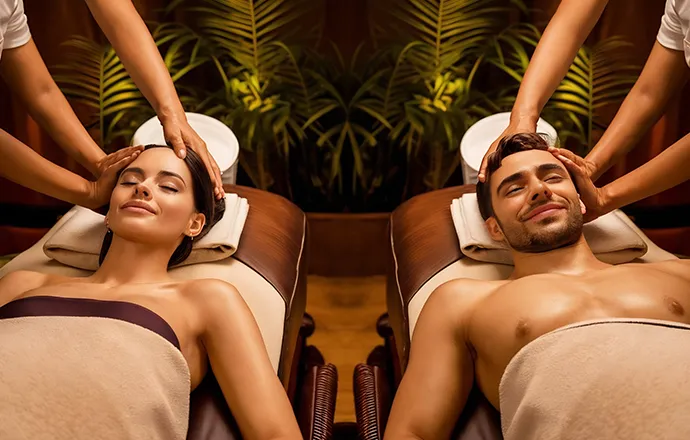
A spa treatment is built around a single session. Book a massage, book a facial, walk out feeling looser. There is no dosha assessment, no multi-day protocol, and no dietary follow-up. That is not a flaw, spas are designed for short-term relaxation and they do that job well.
But the two should not be confused as interchangeable wellness options. Panchakarma is closer to a medically guided intervention than a pampering session. It is typically supervised by an Ayurvedic physician who checks progress daily and adjusts oils, herbs, or duration based on how the body responds.
If the goal is a weekend reset after a stressful month, a spa treatment covers that need efficiently. If the goal involves chronic digestive trouble, skin conditions, joint pain, or general detoxification under professional supervision, panchakarma is the more relevant path, and it usually requires several days rather than a single afternoon.
Resorts offering authentic Ayurveda treatment, such as the panchakarma program available at Chowara Beach in Kovalam, typically include daily consultations, a full board Ayurvedic diet, and free medicines through the treatment period as part of the package, since diet and herbs are treated as inseparable from the therapy itself.
The difference comes down to intent. A spa relaxes muscles for an afternoon. Panchakarma tries to correct what is happening beneath them, guided by a diagnosis specific to one person's constitution. Which one fits depends less on budget and more on what the body is actually asking for right now. Worth asking before the next booking: is this a treat, or is it something the system genuinely needs?
Not really. A spa booking gets you a massage slot. Panchakarma starts with a physician sitting down with you, asking about digestion, sleep, stress, sometimes for twenty minutes before any oil is even warmed up. That consultation is the part most people skip in their head when they picture "Ayurveda treatment."
There's no fixed number. It genuinely depends on what the doctor finds during the initial assessment. Some guests need a shorter preparatory stretch, others need the full sequence through recovery. Anyone promising an exact day count before seeing you hasn't actually done the consultation part right.
No, and that surprises people. Panchakarma gets used plenty for prevention and general rejuvenation, not just for treating an existing complaint. The dosha assessment still happens either way, since even a healthy body has a constitution that responds better to some therapies than others.
Rarely all five on one guest. The physician usually narrows it down to whichever therapies match the specific imbalance showing up, kapha congestion calls for something different than a pitta-driven skin issue. Applying every therapy regardless of need isn't how a properly run program operates.
Because digestion gets deliberately unsettled as part of the process, that's the whole mechanism behind releasing stored toxins. A supervised, individualized meal plan keeps the body steady through that shift. Skip it, or eat outside the plan, and a lot of the earlier work quietly unravels within days.