
+91 9895734005
Call us anytime
info@idealkerala.com
Drop us a line anytime!
+91 9895734005
Call us anytime
info@idealkerala.com
Drop us a line anytime!
Menopause brings a shift in the body that most women feel long before a doctor confirms it. Ayurvedic medicine for menopause approaches this stage differently from a standard prescription pad. It treats the transition as a change in dosha balance rather than a single hormonal event to be managed until it passes.
At Ideal Ayurvedic Resort in Kovalam, this stage of a woman's life is read through the lens of Vata, Pitta, and Kapha, the three doshas that govern body function according to Ayurvedic thought. As estrogen and progesterone shift, Vata tends to rise. That rise shows up as sleep disruption, joint stiffness, mood swings, and the vaginal dryness or irritation many women describe as one of the harder parts of this stage.
Table of Contents
Ayurveda gynecological care starts with a constitutional analysis, not a checklist of symptoms. A practitioner looks at a woman's underlying prakriti, her natural constitution, before deciding which therapies apply. This matters during menopause because two women with identical complaints, say hot flashes and irregular sleep, may need entirely different treatment paths depending on which dosha is driving the imbalance.
The resort's approach to gynecological disorders draws on this same diagnostic model used for conditions like PCOD, fibroid-related discomfort, and irregular bleeding. Menopause is not separate from this framework. It sits at the far end of the same reproductive continuum that begins at menarche, and Ayurvedic texts have always treated the two milestones as bookends of the same physiological arc.
Panchakarma detoxification forms the backbone of most Ayurvedic menopause protocols. The idea is straightforward even if the process is intricate. Toxins, called ama in Ayurvedic terminology, accumulate in tissue over years of digestive and hormonal strain. Clearing that buildup before addressing symptoms directly is considered a prerequisite, not an optional add-on.
Two therapies within this detox process show up often in gynecological care: Virechana and Vamana. Virechana is a purification method aimed at excess Pitta, useful for the irritability and internal heat some women report during this transition. Vamana targets Kapha accumulation and is used less frequently for menopause specifically, though it remains part of the broader panchakarma toolkit for related disorders.
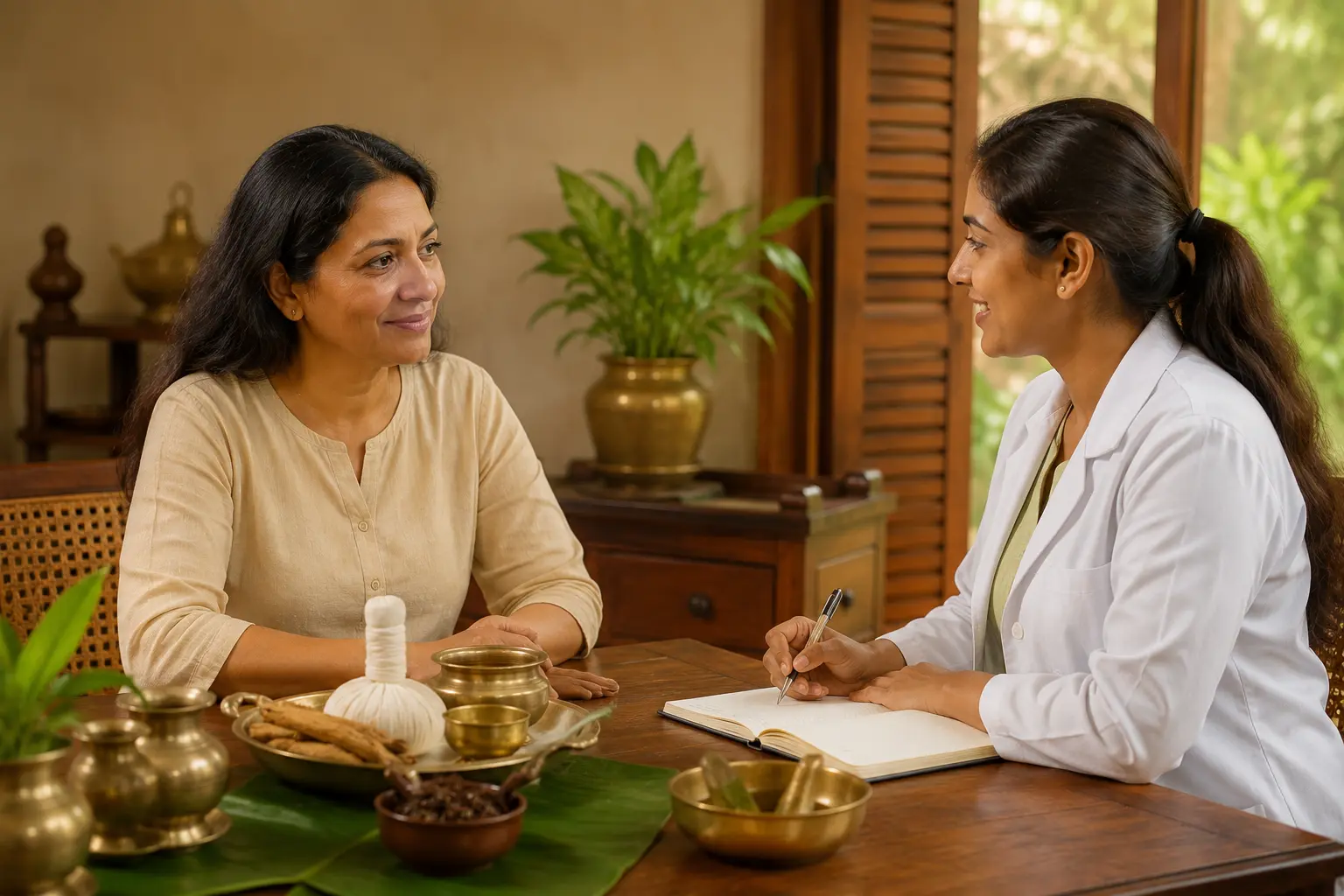
Uttarabasti therapy is one of the more targeted treatments in the Ayurvedic gynecological repertoire. It involves administering medicated preparations directly through the genital tract during a specific phase of the reproductive cycle, and it is used to address bladder and genital region complaints that often persist through perimenopause and beyond. This is not a generic wellness treatment. It requires supervision from a qualified Ayurvedic physician, which is why constitutional diagnosis happens before any therapy begins.
Alongside these procedures, herbal formulations play a supporting role. Ashokarishta and Lodhra are two classical preparations associated with hormonal support and reproductive tissue health in Ayurvedic pharmacology, though any herbal regimen should be guided by a licensed practitioner familiar with a woman's full health history rather than taken as a self-directed remedy.
At Ideal Ayurvedic Resort, treatment for gynecological concerns, menopause included, follows a defined structure. There is an initial consultation, daily monitoring by a doctor throughout the stay, and a final consultation before departure. Diet is treated as part of the therapy rather than an afterthought, with an individualized Ayurveda meal plan built around each guest's constitution and current imbalance. This mirrors the broader Panchakarma detoxification program offered at the resort, which uses the same root-cause philosophy for a wider range of chronic conditions.
Duration varies by individual. A physician may extend or shorten a treatment plan depending on how a patient responds, which is standard practice in Ayurvedic medicine and one reason a rigid, one-size timeline rarely applies to menopause care.
It's worth being direct about scope. Ayurvedic treatment for menopause is not positioned as a replacement for hormone therapy or a substitute for a gynecologist's ongoing input, particularly for women managing bone density concerns, cardiovascular risk, or other conditions tied to postmenopausal health. According to guidance from the National Institute on Aging, menopause-related health monitoring should remain part of a woman's regular medical care regardless of which complementary therapies she pursues.
Menopause is not a problem to be fixed in a week, and Ayurveda does not claim otherwise. What it offers is a structured, constitution-based way to work with the transition rather than against it. If you're weighing whether an Ayurvedic approach fits alongside your current care, what would you want a practitioner to assess first, your sleep, your digestion, or your hormonal history?
Generally yes, but it needs to be supervised. A qualified Ayurvedic physician will want to know your full medication history before recommending herbal formulations or panchakarma therapies, since some detox processes are timed around hormonal cycles.
There's no fixed number. Duration depends on your constitution and how you respond to the initial therapies, and a physician typically adjusts the plan after daily monitoring rather than locking you into a preset schedule from day one.
A physician administers a medicated preparation through the genital tract during a specific phase of the reproductive cycle. It's used for bladder and reproductive tract complaints, and it's always done under direct medical supervision, never as a home remedy.
Diet isn't a side note here. It's built into the treatment plan based on your dosha imbalance, since Ayurvedic thought treats digestion and hormonal regulation as closely linked processes rather than separate systems.